


Hydraulic Winch Working Principle And Power Driving Method
Leave a message

Hydraulic Winch is a small and light lifting device that uses a drum to wind a steel wire rope or chain to lift or tow heavy objects, also known as a winch. The winch can lift heavy objects vertically, horizontally or tilted. There are three types of winches: manual winches, electric winches and hydraulic winches. Mainly electric winches. It can be used alone or as a component of machinery such as lifting, road construction and mine hoisting. It is widely used because of its simple operation, large rope winding volume and convenient displacement. Mainly used in construction, water conservancy projects, forestry, mines, docks, etc. for material lifting or flat towing.
Hydraulic Winch (also called mini winch) The motor and the wire rope are on the same drive shaft, which is light and compact, saving space (its tonnage includes 200 kg, 250 kg, 300 kg, 500 kg, 750 kg, 1000 kg, etc.).
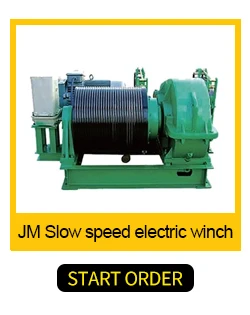
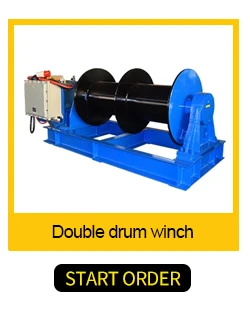
Slow winch: A winch with a rated speed of about 7~12m/min of the wire rope on the drum.
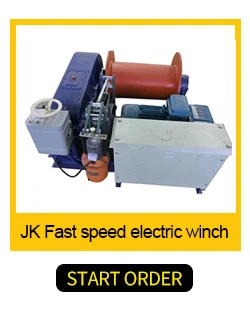
Fast winch: A winch with a wire rope rated speed of about 30m/min on the drum.
Electric winch: A winch that is powered by a motor and rotates the drum through a driving device.
Speed-regulating winch: a winch with adjustable speed control.
The hydraulic winch uses oil as the working medium, transmits the movement through the change of the sealing volume, and transmits the power through the pressure inside the oil.
(1) Power part - converts the mechanical energy of the prime mover into the pressure energy (hydraulic energy) of the oil, for example: a hydraulic pump.
(2) Execution part - converts the hydraulic pressure energy input from the hydraulic pump into the mechanical energy that drives the working mechanism. For example: hydraulic cylinders, hydraulic motors.
(3) Control section - used to control and regulate the pressure, flow and flow direction of the oil, such as pressure control valves, flow control valves and directional control valves.
(4) Auxiliary part - The first three parts are connected together to form a system for oil storage, filtration, measurement and sealing. For example: piping and fittings, fuel tanks, filters, accumulators, seals and control instruments. The pressure applied at any point on a volume of liquid.
If you are interested in our products, please contact us right now for best quotation .


